Auttendo
An AI crew for a company. One agent per project, and a personal one for everyone.
- Role
- Product design and engineering
- With
- Tim, at Dazzled
- When
- May to November 2026
Auttendo started with a simple idea. A business owner sends a WhatsApp message like “add our summer hours to the contact page”, and it gets done. Agents made the change in a real codebase and reported back in plain language.
We kept pulling on that thread. If an agent can look after a bakery’s website, it can also watch prices, write the ads and keep an eye on the shop’s orders. By September the product had become a workspace. Every cluster of work in a company gets a Project, every Project gets exactly one agent, and every person gets a personal one. Mine was called Pietje.
Auttendo is about to change completely. Before it does, this is how it looked on 6 November 2026, captured from our own workspace.


The crew
Home shows the crew. Each agent is a small character in its Project’s colour, and the bubble above it says what it worked on last. Lennie runs Monitoring and posts a price update every day.


Talking is the interface
Everything starts in a conversation. You ask in plain words, the agent does the work, and each step shows up in the thread. Here I asked Pietje to turn a set of website-editing rules into a skill that every Project could reuse.


The Inbox
When an agent needs a person, its conversation lands in the Inbox. This one is the agent for a WooCommerce shop, removing the new-order notification it had been asked to stop.


Everything it makes
Whatever the agents make ends up in the Library: documents, databases, small apps and skills. The price monitoring dashboard in this list is an app built inside the Monitoring Project.


Connected to the tools you already use
Agents worked in the apps a company already had. Gmail, Google Sheets, Slack, Notion, Medusa and WooCommerce were a click away, out of more than 3,000 apps, and any MCP server could be added on top.
Around the edges
Routines ran on a schedule. Pietje wrote me a morning brief every day at 07:30. Each agent also had a voice, its own settings and a private library.
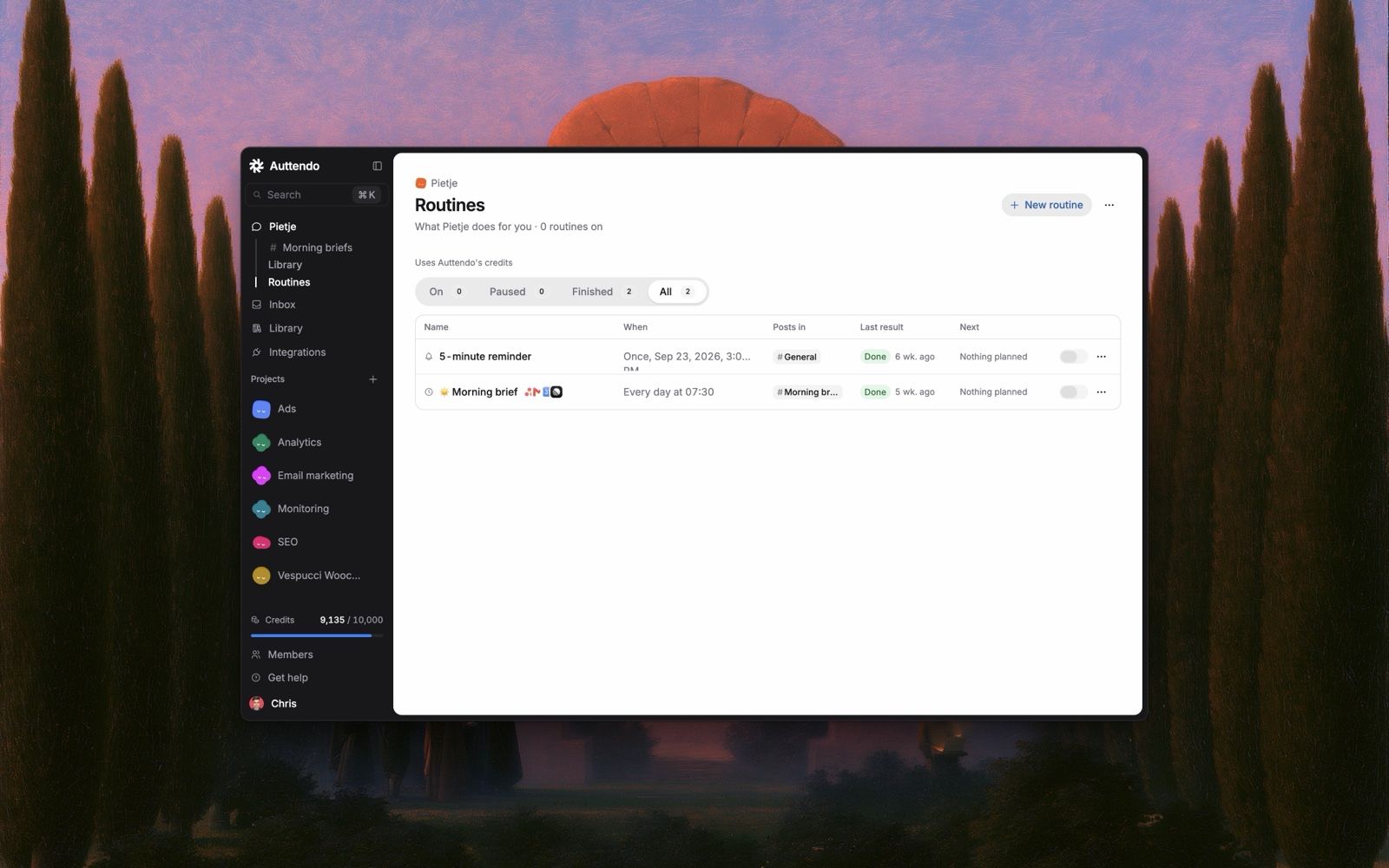 Routines /personal/routines
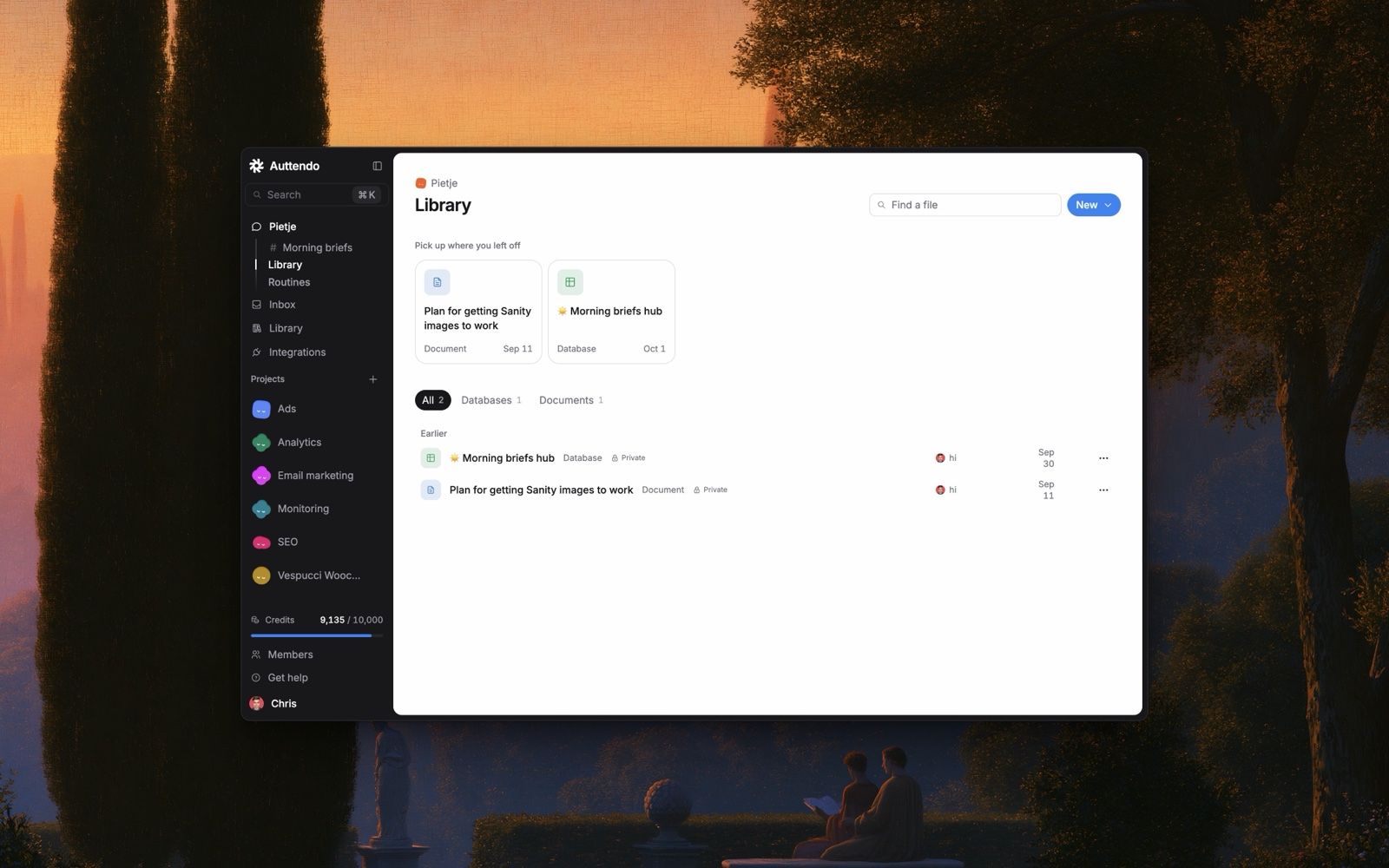 Personal library /personal/library
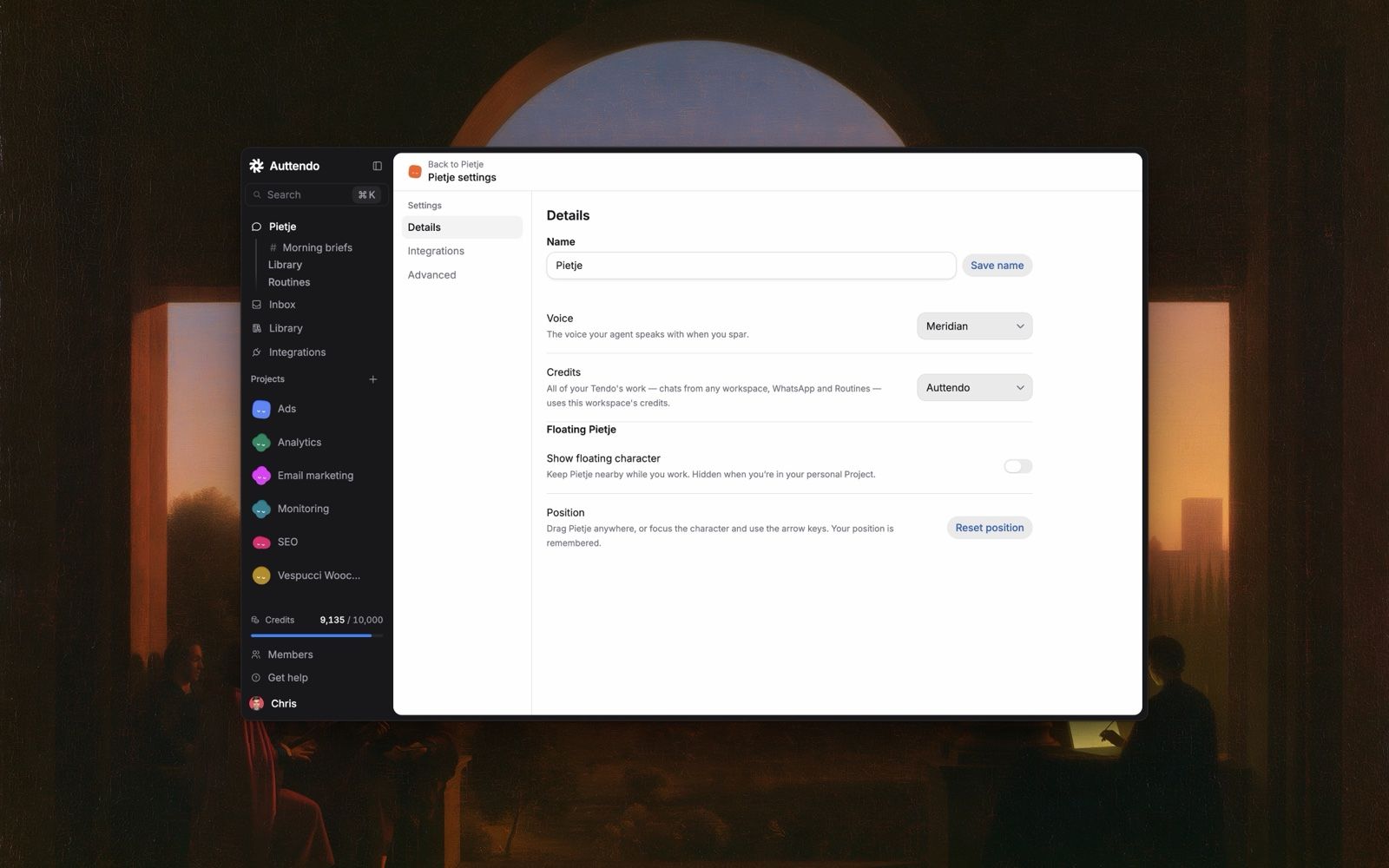 Agent settings /personal/settings


The build
Built with Tim out of Dazzled, our product studio. The last version was a full rebuild: 556 commits between 7 September and 26 October 2026, for the web and a Mac app.
I’m proud of what we shipped. This page is here so I remember what it looked like.